At ABA's May Community Forum, there was a brief discussion specifically about small bookstores. To follow up on this, we sat down with ABA Board member Talia Whyte from Rozzie Bound Co-op in Roslindale, Massachusetts. 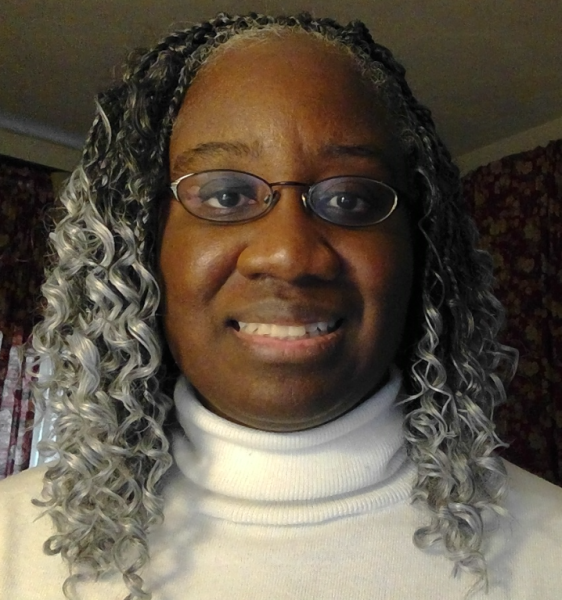
Whyte shared some of the advantages of running a small store, some of the resources Rozzie Bound has found most helpful, and her advice for other small bookstores!
Bookselling This Week: To start, why don't you give us a little overview of your store, Rozzie Bound Co-op?
Talia Whyte: Rozzie Bound is a hybrid cooperative bookstore in Boston. We became an incorporated cooperative in 2022. We are a general interest store, but we emphasize books by historically marginalized authors.
BTW: This can vary widely, but to you, what makes a small indie bookstore “small?”
TW: Yes, there are different meanings for “small” depending on the bookstore.
In our case, Rozzie Bound is housed in a 225-square-foot brick-and-mortar space staffed by five people. We purposely chose a small, affordable space because commercial real estate in Boston is highly competitive and expensive!
We also wanted to test out the idea of having a bookstore in our community to see if there was a market for what we were selling. Since opening, we have had a great response from the community for our endurance and creativity, and we will be celebrating our fifth anniversary next year!
We are also hoping we can move into a larger space soon.
BTW: What would you say are some of the challenges a small store faces?
TW: We are unable to sell everything we would like in the store due to limited customer-facing shelving and storage space. Only about ten customers can comfortably be in at one time and we’re not able to host many events in our store. Some people also assume that because you are a small store, you’re not a “real” bookstore, or you don’t have the ability to do a lot of things.
BTW: On the flip side, what are the advantages?
TW: There are a lot of advantages!
Having a small space forces you to be more creative about how you use “space.” The in-store book collection is highly curated to the types of books our customers buy regularly. We keep detailed records of what sells and what doesn’t. We also tell our customers that they can buy any book they don’t see on our shelves on our website, and it will be delivered to the store for free pickup. We rely a lot on our website and marketing for sales, as they are an important extension of our physical store.
We regularly host online book drives for local nonprofits, book giveaways, book clubs, and ask customers to buy consumer-owner shares and memberships. We run marketing campaigns all the time. We created a special list of recommended soccer books on our website because Boston is a World Cup host city and we created a yearlong celebration of American literature with the Reading America 250 Challenge.
We’ve also developed strategic relationships with other local businesses and our branch library to host off-site author events in their spaces in our community, with great success for both Rozzie Bound and the partnering businesses. We have so much experience with off-site book events that we are regularly contacted to sell books at events throughout Greater Boston.
In May, we were the bookseller for the Malcolm X Read-a-thon, which is a community reading of The Autobiography of Malcolm X by 200 volunteer readers. We’re also getting ready to sell books at one of the city’s Juneteenth celebrations, which attracts hundreds of potential customers.
BTW: Are there any ABA resources you have found particularly helpful or relevant to running a small store?
TW: Attending the Winter and Children’s Institutes has been very helpful for me to meet with other booksellers who also have small stores and trade advice with each other. I also attend the many Zoom workshops ABA hosts to learn more about improving my bookstore.
BTW: What’s one piece of advice you would give to other small bookstore owners/booksellers?
TW: I’ve been a small business owner for over 25 years, and I have learned that it is important to have a strong vision for your business.
We put a lot of thought into the design and feel of both our physical and online stores to make them attractive to our customers. While you might not control the size of your store, you do control the quality of your customer service and professionalism and your relationships with authors, publishers, vendors, and other businesses, as well as the types of books you sell.
I spend a lot of time thinking about how to make sure everyone who steps into this store has an exceptional experience. Our staff is not only very knowledgeable about books but has also developed a deeper relationship with the community we serve. As a community-owned bookstore, we hold that as our guiding principle.
No one cares how big or small your bookstore is if it is a poorly run business! In essence, it’s not about the physical size of your bookstore; it's what’s going on inside the store that matters.